2026 How to Choose Push Back Storage for Global Buyers

Time:2026-10-14 Author:Amelia
0%

Global buyers are reassessing warehouse density, labor efficiency, and inventory control in 2026. Push-Back Storage deserves attention because it stores multiple pallets per lane while reducing forklift travel. It can create compact, high-density locations behind selective racking. That advantage is practical. However, it is not universal.

The 2024 MHI Annual Industry Report found that 55% of supply chain leaders planned to increase technology investment. The same report highlighted continuing pressure from labor shortages and customer expectations. These pressures make storage density more important, especially where land and labor costs remain high. The 2023 LogisticsIQ Warehouse Automation Report also identified strong automation demand across warehousing and distribution. Yet automation alone cannot correct poor pallet dimensions, unstable loads, or inaccurate inventory records.

Warehouse design authority F. Edward Frazelle has described warehousing as “the heart of the supply chain.” His observation fits Push-Back Storage closely. A rack system influences replenishment speed, product accessibility, and operator safety every day. Buyers should compare pallet depth, load capacity, beam levels, aisle width, and regional engineering requirements. They should also confirm whether LIFO rotation suits the product profile.

Small details matter. A damaged pallet may block an entire lane. A few extra centimeters can affect forklift clearance. Global sourcing adds further complexity, including seismic conditions, fire protection design, spare parts, installation skills, and local standards.

No single configuration wins everywhere. A careful decision combines report evidence, site measurements, supplier testing, and an honest review of operational weaknesses. That last step is often missed.
2026 How to Choose Push Back Storage for Global Buyers

Define Push-Back Racking: 2–6 Pallet Depths and LIFO Flow (FEM)

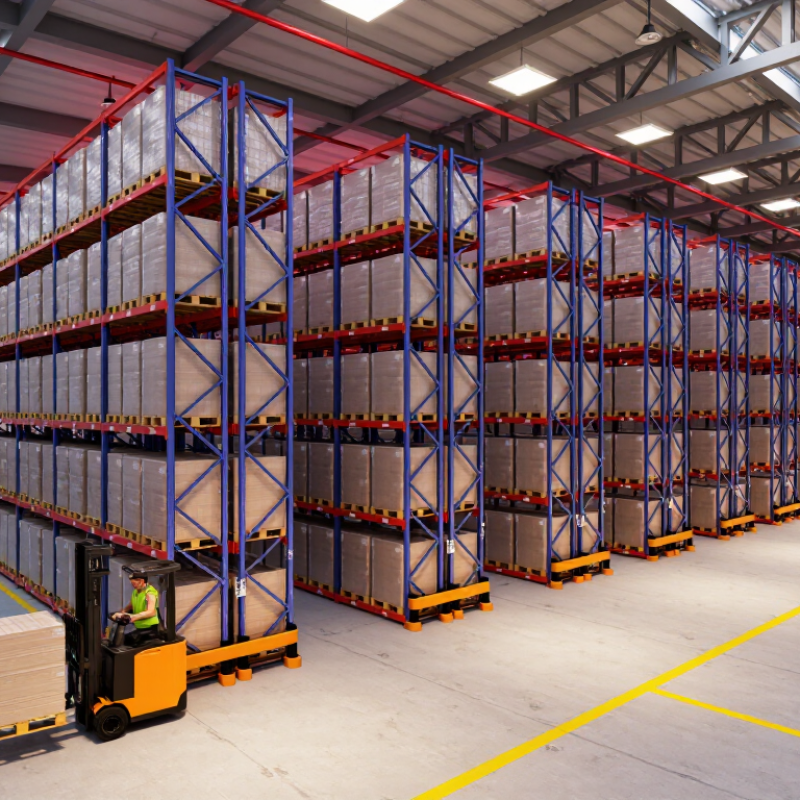
Push-back racking stores pallets two to six positions deep on each lane. It uses nested carts or wheeled rails inside an inclined bay. A forklift places the next pallet from the aisle, pushing earlier pallets backward. During retrieval, the front pallet leaves first, and the remaining pallets roll forward.

This creates a clear LIFO flow: last in, first out. It suits batch storage where product age is controlled by lot rules, not by strict first-in, first-out rotation. The two-deep layout offers easier access and simpler loading. Six-deep storage saves aisle space, but it needs accurate pallet sizes, consistent weights, and dependable cart movement. Small variations can create friction, gaps, or unstable positioning.

Global buyers should request a load plan based on pallet dimensions, rack height, floor condition, and forklift reach. Check the required FEM design criteria and confirm local seismic, fire, and workplace rules with a qualified engineer. In practice, operators often focus on capacity and overlook impact protection at aisle ends. That is a costly omission. A trial bay with real pallets can reveal problems that drawings miss. I would also question whether deep lanes match actual inventory turnover. High-density storage is not automatically efficient when workers must search through mixed batches. Regular inspections should check beams, frames, rails, carts, locking parts, and pallet overhang. Some assumptions will be wrong. Better measurements make them visible early.

Match SKU Turnover: LIFO Storage for 2–6 Deep Pallet Positions

Push-back storage is most effective when SKU turnover matches a LIFO operating pattern. Each lane stores two to six pallets behind one another, using carts that move along inclined rails. Operators load and retrieve from the same aisle. This reduces travel distance and preserves valuable floor space. The 2024 MHI Annual Industry Report found that 55% of supply-chain leaders planned to increase technology investment. Yet, better equipment cannot correct poor SKU logic.

Use two-deep positions for faster-moving pallets with regular replenishment. Four to six deep positions suit slower, homogeneous inventory with longer production or purchasing cycles. Avoid mixing different SKUs in one lane. The front pallet may hide urgent stock behind it. That mistake creates extra handling and weakens LIFO discipline. A simple slotting review should compare weekly pallet demand, replenishment frequency, pallet weight, and expiry controls.

In warehouse audits, I look for clear load labels, visible lane identification, and safe forklift clearance. The Rack Manufacturers Institute’s guidance stresses that rack capacity depends on configuration, beam levels, and load placement. Local seismic and workplace rules still apply. A 2–6 deep design is not automatically efficient. The right depth depends on turnover data, not maximum density. One practical test is a four-week pilot using real pick records. Measure travel time, blocked pallets, and replenishment touches. The result may challenge the original layout.

Compare Capacity: Up to 40% More Density Than Selective Racking

Push-back storage can deliver up to 40% more pallet density than selective racking, but the result depends on layout and operating discipline. Deeper lanes reduce aisle space, allowing more pallets inside the same building footprint. For example, a 1,000-pallet selective layout may approach 1,300 or 1,400 positions after careful redesign. That figure is not guaranteed.

The 2024 MHI Annual Industry Report surveyed more than 1,700 supply chain professionals. It found that 83% expect to adopt robotics and automation within five years. Higher storage density supports this direction by shortening travel paths and concentrating inventory. However, push-back systems usually suit several pallets of the same SKU. They are less suitable when every pallet requires immediate access. LIFO operation also needs careful inventory control.

Site experience reveals small details that calculations often miss. Pallet dimensions must remain consistent. Damaged pallets can jam nested carts. Uneven floors may affect lane movement. Fire protection, seismic design, load ratings, and local codes require professional review. WERC’s 2024 DC Measures report emphasizes measuring warehouse performance through operational metrics, not floor capacity alone. That point deserves attention. A spreadsheet can still lie.

Global buyers should compare usable pallet positions, access frequency, SKU variety, and handling equipment together. Request a density calculation based on real inventory data. Ask for a seasonal simulation, too. Peak stock may expose weak assumptions.

2026 Push-Back Storage Capacity Comparison

Typical planning benchmarks show that push-back racking can provide approximately 20%–40% more pallet density than selective racking by storing pallets two to six positions deep. Actual results depend on pallet dimensions, aisle width, equipment, SKU mix, and site layout.

Storage density index: selective racking = 100. The comparison represents common warehouse planning ranges rather than a guaranteed system result.

Verify Safety: EN 15635 Inspections and RMI MH16.1 Load Standards

Choosing push-back storage for global operations requires more than comparing capacity and price. Safety evidence should guide the decision. EN 15635 provides a practical framework for using and maintaining steel storage equipment. It expects regular visual checks, documented findings, and competent inspections at planned intervals. A detailed expert inspection is generally required at least every twelve months, or more often when risk conditions demand it.

Look closely at frames, rails, guards, connectors, and pallet positions. Bent uprights, missing safety pins, uneven rails, and damaged pallets need immediate attention. Load notices must show the permitted configuration clearly. They should match pallet weight, beam levels, bay width, and the actual push-back equipment.

Load signs matter. Never rely on memory.

RMI MH16.1 supports the engineering side of industrial steel rack selection. It addresses design, testing, and safe use, including the effects of loads and rack configuration. Ask for calculations, material details, testing evidence, and installation requirements. Then compare them with local building and workplace rules. A rack that meets one reference may still need additional regional review.

During warehouse inspections, small changes often create large risks. Operators add heavier pallets, alter levels, or replace components without updating records. That habit is easy to overlook.

No inspection process is flawless, so buyers should require training, traceable reports, and a clear process for reporting damage.

Calculate ROI: Pallet Density, Forklift Time, and 5-Year Operating Costs

For global buyers, push-back storage should be measured as a five-year investment, not a rack price. Start with pallet positions: usable positions divided by floor area reveal density. Then compare it with selective storage. A warehouse holding 1,200 pallets may gain 25 percent more positions, but access can become slower. That trade-off matters.

Record forklift travel during a normal shift, including empty returns and waiting at aisles. If push-back reduces 18 minutes of travel per truck daily, multiply saved hours by local labor and energy rates. Include wages, charging or fuel costs, maintenance, and downtime. Do not trust a perfect utilization forecast. I would model 80 percent occupancy, not 100 percent, because mixed SKU demand creates gaps. This assumption is conservative, though it may still be optimistic during seasonal peaks.

The five-year model should include equipment, installation, inspections, repairs, relocation, and operator training. A simple ROI formula is five-year savings minus total five-year cost, divided by total cost. Test low, expected, and high throughput scenarios. For example, $42,000 in avoided forklift labor and energy against $110,000 installed cost produces negative direct ROI, unless added capacity prevents expansion. That missing capacity value is often overlooked. Validate the figures with one week of warehouse data before approving the layout.

FAQS

How much more pallet density can push-back storage provide?

It can provide up to 40% more pallet positions than selective storage. The result depends on layout, pallet size, and aisle design. A 1,000-pallet layout might reach 1,300 positions. That estimate is not guaranteed.

When is push-back storage a suitable choice?

It suits warehouses storing several pallets of the same item. It reduces aisle space and concentrates inventory. It may not suit operations needing immediate access to every pallet. Access matters.

What inventory limitations should buyers consider?

Push-back storage commonly uses last-in, first-out handling. This requires accurate inventory records and disciplined operation. Mixed items can create empty spaces inside lanes. That weakness is easy to underestimate.

Which physical details can affect storage performance?

Pallet dimensions should remain consistent across the storage system. Damaged pallets may jam nested carts. Uneven floors can affect lane movement. Small defects can create large delays.

What safety checks should warehouse operators perform?

Inspect frames, rails, guards, connectors, and pallet positions regularly. Look for bent uprights, missing pins, and uneven rails. Damaged parts need prompt attention. Do not rely on memory.

What information should appear on load notices?

Load notices should show the approved rack configuration clearly. They should match pallet weight, beam levels, bay width, and equipment. Operators need visible information at each storage area. Labels alone are not enough.

How should buyers calculate five-year return on investment?

Include equipment, installation, inspections, repairs, relocation, training, labor, energy, and downtime. Record forklift travel, waiting time, and empty returns during normal shifts. Test low, expected, and high activity scenarios. Perfect utilization is unlikely.

Why should buyers validate calculations with warehouse data?

Capacity forecasts can ignore seasonal gaps, damaged pallets, and operator behavior. An 80% occupancy assumption may be conservative. It may still prove optimistic during peak periods. A spreadsheet can lie.

Conclusion

Push-Back Storage is a high-density pallet storage solution designed for warehouses that need efficient use of floor and vertical space. With pallet lanes typically arranged from two to six positions deep, it uses a LIFO (last-in, first-out) flow, making it suitable for products with predictable demand, batch handling, or lower SKU turnover. Before selecting a system, global buyers should compare pallet dimensions, load weights, lane depth, forklift compatibility, and inventory rotation requirements.

Compared with selective racking, push-back systems can provide up to 40% greater storage density by reducing aisle requirements and improving space utilization. Buyers should also verify structural safety through regular inspections aligned with EN 15635 principles and confirm that the design meets recognized load and material-handling standards such as RMI MH16.1. A practical ROI review should measure increased pallet density, reduced forklift travel and handling time, installation expenses, maintenance needs, and projected five-year operating costs.

Amelia

Amelia

Amelia is a seasoned marketing professional with a wealth of expertise in our company’s core offerings. With an unwavering passion for driving growth and innovation, she plays a pivotal role in shaping our marketing strategies and enhancing brand visibility. A key aspect of her responsibilities......