When cartons pile up, picking slows and valuable aisle space disappears. Carton Flow Storage uses inclined roller or wheel tracks to move cartons from the loading side toward the picking face. Done well, it can support orderly replenishment, quick access, and a clearer first-in, first-out flow. Small details matter.
For global buyers, choosing a system means looking beyond the rack price. Carton dimensions, package weight, carton quality, and daily order volume all affect lane performance. A track suited to sturdy boxes may not handle soft-sided or uneven cartons reliably. Shelf depth, slope, replenishment access, and available warehouse equipment also deserve careful review. Ask suppliers for specifications and, where possible, test representative cartons before approving a large order.
This guide presents seven practical tips for comparing options, planning layouts, and discussing requirements with suppliers. It covers product fit, lane configuration, loading and picking access, safety considerations, and future capacity. The right design depends on the goods and the work process, not on a standard diagram alone. Measure actual cartons, include heavier and lighter examples, and confirm how staff will replenish each lane. A small pilot can reveal friction points that drawings miss. It may feel slower at first. That is useful feedback, not a reason to ignore the issue. Review the results before scaling up, and document any assumptions that still need checking.
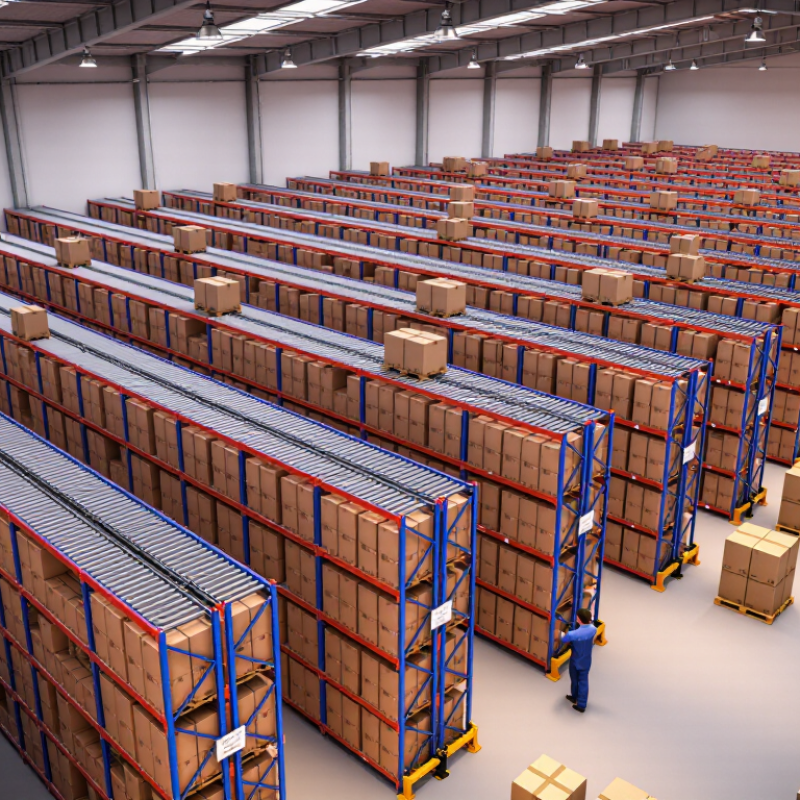
Carton flow storage uses inclined roller tracks to move cartons from a replenishment side to a picking side. Gravity advances each carton as the one in front is removed. Simple, but not foolproof. The core system includes a supporting frame, rollers or wheels, lane dividers, and front stops that keep cartons from slipping out. Dividers help prevent neighboring cartons from drifting into the wrong lane, especially when packages vary slightly in width. The frame must also suit the load and available aisle space.
At the loading end, workers place new cartons behind existing stock; pickers retrieve items from the opposite end. This arrangement supports first-in, first-out rotation when lanes are loaded and used correctly.
Slope and roller spacing matter. Too little incline may leave cartons stalled, while too much can cause them to bump hard against the front stop. Test with real cartons. A light, smooth box may behave differently from a heavier carton with a rough base. Before selecting a layout, check carton dimensions, weight, and condition across the product range. Periodic checks for debris, damaged rollers, and loose dividers can prevent small interruptions.
One detail buyers sometimes underestimate is carton variation; specifications on paper do not always match cartons on a busy warehouse floor.
Carton flow works best when carton dimensions are measured, not guessed. Record each carton’s length, width, height, weight, and replenishment frequency, then group cartons with similar footprints. A lane that is too wide lets cartons skew; one that is too narrow creates friction. Keep a few real cartons beside the design drawings. They reveal awkward flaps and soft packaging quickly.
Throughput matters as much as fit. Estimate peak cartons per hour, replenishment intervals, and picking positions before setting lane depth. The 2024 MHI Annual Industry Report found that 55% of surveyed supply chain leaders planned to increase technology investment. That supports a practical point: measure performance before adding automation. WERC’s DC Measures benchmarking work tracks warehouse measures such as picking productivity and order accuracy; use comparable site data to set realistic targets. Check that replenishment staff can reach the rear of each lane without blocking pickers. Small details matter.
Review aisle width, rack height, floor condition, sprinkler clearance, and safe access for replenishment equipment. Test a loaded lane during a busy shift, not just during installation. Watch for cartons stopping short. Record jams and refill time for several days. One limitation: seasonal cartons may not fit the standard lane. That can mean slower picks. Plan for exceptions, and revisit the layout when carton mix or order volume changes.
Use peak hourly demand to estimate the number of active carton flow lanes. The chart uses a planning assumption of 60 cartons per lane per hour; actual capacity varies with carton dimensions, product mix, replenishment, and picking method.
Calculation: required lanes = peak cartons per hour ÷ 60 cartons per lane per hour, rounded up. Validate the rate with a site trial before finalizing warehouse layout or equipment specifications.
Carton flow works best when rack depth, roller type, and carton size are matched to the actual pick. Measure the heaviest case, its base dimensions, and how smoothly it slides when full. Wide, rigid cartons may suit continuous rollers; smaller cartons often need closer-spaced wheels to prevent snagging. Specify lane width and dividers for each SKU, not just the average carton. A small mismatch can leave cases skewed at the pick face.
Tips: Check roller load ratings and slope with loaded cartons. Test a sample lane. Confirm replenishment access, beam clearances, and whether operators can reach the front case without leaning. For global purchasing, request dimensioned drawings, material details, and load-test documentation in consistent units. Packaging differs across regions, and a drawing alone cannot reveal friction or carton deformation. I have seen an apparently tidy layout need adjustment after real cases were loaded.
The MHI and Deloitte 2024 Annual Industry Report found that 55% of surveyed supply-chain professionals planned to increase technology investment. That points to growing interest in operational improvements, but it does not prove automation suits every flow lane. Start with pick frequency, replenishment labor, and peak demand. Use a short pilot to compare retrieval time and jams across roller pitches. Record the results, including the awkward cases; they often reveal what the specification missed.
7 Carton Flow Storage Tips for Global Buyers
Planning Safe Loading, Replenishment, and Inventory Rotation
Carton flow storage works best when cartons move smoothly without leaning, snagging, or crushing. Check carton dimensions, weight, and base strength before choosing lane width and roller pitch. A lane that looks efficient on a drawing may jam when cartons arrive slightly bowed. Test samples under realistic load. Measure under load.
Tips: Load cartons squarely and keep heavy cases within the rack’s rated capacity. Replenish from the rear and pick from the front to support first-in, first-out rotation. Mark lanes clearly with item and lot details. Keep cartons within the guides, and avoid pushing them against the stop too hard. Test one lane first.
Replenishment routines matter as much as rack design. Set a visible minimum stock level at each lane, then refill before the picking face runs empty. Train staff to check for damaged packaging and blocked rollers during each refill. Simple checks catch small problems early. Still, rotation is not automatic: mixed batches or inconsistent carton sizes can disrupt the flow. Review lane assignments when products change, and adjust the process rather than forcing every carton into the same setup.
| 7 Carton Flow Storage Tips for Global Buyers - Planning Safe Loading, Replenishment, and Inventory Rotation | ||||
|---|---|---|---|---|
| # | Planning Area | Practical Guidance | Safety and Loading Check | Replenishment and Rotation |
| 1 | Match the lane to the carton | Confirm carton width, length, height, weight, base condition, and packaging consistency before selecting lane dimensions and rollers. | Test representative cartons, including the lightest and heaviest loads. Verify that cartons move smoothly without tipping, wedging, or colliding. | Group products with compatible carton sizes and flow behavior in the same lane where practical. |
| 2 | Respect rated capacities | Use the rack and track capacities stated by the equipment supplier. Consider the load per lane, shelf, bay, and frame—not just the weight of one carton. | Post load limits where operators can see them. Do not exceed ratings or alter structural components without an approved assessment. | Include expected replenishment quantities in the load calculation so a full lane remains within its rated capacity. |
| 3 | Load cartons consistently | Place cartons squarely on the track and keep the product label or handling information visible where possible. | Load from the replenishment side using safe handling practices. Keep hands clear of moving cartons and use suitable lifting equipment for heavy loads. | Place new stock behind existing stock in the lane to support first-in, first-out (FIFO) picking. |
| 4 | Set replenishment triggers | Calculate a reorder point from expected demand during replenishment lead time plus the chosen safety stock. | Check that replenishment quantities fit the lane and do not create overloading or block access to adjacent locations. | Use visible minimum and maximum levels, or a documented system alert, to trigger replenishment before the pick face runs empty. |
| 5 | Protect FIFO or FEFO rotation | Assign one clearly identified product or SKU to each lane unless the operating process specifically supports mixed stock. | Keep lot, batch, or expiry details legible and prevent cartons from bypassing the intended flow sequence. | Use FIFO for general stock rotation. For dated goods, use first-expired, first-out (FEFO) and load cartons so the earliest expiry is picked first. |
| 6 | Plan replenishment access | Separate picking and replenishment activities where the layout and operating schedule allow, especially in high-traffic areas. | Keep aisles, exits, and access to safety equipment clear. Define traffic rules and use designated equipment for the rack layout. | Schedule replenishment during quieter periods where possible, and confirm that pickers can reach the discharge face without obstruction. |
| 7 | Inspect and review performance | Include tracks, rollers, stops, frames, labels, and carton condition in routine inspections. | Remove damaged cartons and report bent, loose, or otherwise damaged rack components. Follow site procedures for isolating unsafe equipment. | Track stockouts, replenishment frequency, carton jams, and expired or obsolete stock; adjust lane assignment and stock levels using actual operating data. |
| Planning note: Capacity, track configuration, operating procedures, and inspection frequency should be confirmed against the equipment supplier’s specifications and the facility’s risk assessment. | ||||
Global buyers should assess carton flow suppliers beyond the quoted rack price. Ask for load-test records, material specifications, component origin, and references from comparable installations. Check that drawings show carton dimensions, lane pitch, clearances, and replenishment access. The World Bank’s 2023 Logistics Performance Index evaluates 139 economies across six logistics dimensions, including infrastructure and customs. A supplier’s export experience matters, but it does not replace checking requirements at the destination. Small mismatch. Big delay.
Tips: Send a real carton sample or precise dimensions before approval. Request a written load rating and installation guide. Confirm local requirements for rack safety, fire performance, and product documentation with a qualified local adviser. Keep these records with the purchase order. I would not rely on a sales promise alone; paper trails can be imperfect, so verify critical figures independently.
Compare total landed and operating cost: freight, duties, unloading, installation, spare rollers, and downtime during repairs. CSCMP’s 2024 State of Logistics report estimated U.S. business logistics costs at $2.3 trillion in 2023, or 8.7% of GDP. That figure is not a carton-flow price benchmark, but it shows why handling and storage costs deserve attention. Ask suppliers to state warranty coverage, lead times for replacement parts, and how damaged lanes are repaired. A low bid can still cost more when parts cross borders slowly. I have seen one overlooked detail—pallet access—create awkward replenishment. It is worth checking twice.
Inclined rollers move cartons from the replenishment side toward the picking face. Gravity advances each carton when the front one is removed. Simple, but not foolproof.
A typical lane has a frame, rollers or wheels, dividers, and front stops. Dividers keep cartons in their lanes, while stops prevent them from slipping out.
Load new cartons from the back and pick from the front. This supports first-in, first-out use when workers refill lanes correctly. Errors can still happen.
Test loaded cartons in a sample lane. Too little slope may stall a carton; too much can make it hit the front stop hard.
Check the heaviest carton, its base dimensions, and how smoothly it moves when full. Include the widest and smallest cases, not just average sizes. Paper specs can miss real variation.
Match lane width and dividers to each carton type. Check clearances and confirm workers can reach the front case without leaning. Test the awkward cartons, too.
Ask for dimensioned drawings, load ratings, material details, installation guidance, and replacement-part lead times. Send a real carton sample when possible. Drawings alone are not enough.
Include freight, duties, unloading, installation, spare rollers, and repair downtime. A low purchase price may hide slow replacement parts. I would check pallet access twice.
Confirm local rack safety and documentation requirements with a qualified local adviser. Keep records with the purchase order, and verify critical figures independently. Paper trails can be imperfect.
Carton Flow Storage is a dynamic shelving solution that uses inclined rollers to move cartons from a loading side to a picking side, helping keep goods accessible and supporting orderly stock rotation. Choosing the right system starts with understanding carton dimensions, weight, daily throughput, available floor space, and the warehouse’s picking and replenishment routines.
Buyers should compare rack structures, roller types, lane widths, and configurations to match their operation and product mix. Safe loading practices, clear replenishment procedures, and regular checks help maintain smooth flow and reduce handling risks. For international purchases, evaluate suppliers based on product specifications, relevant compliance documentation, communication, delivery arrangements, and after-sales support. Comparing the full cost—including installation, maintenance, and expected service life—can help buyers select a practical system that fits both current needs and future changes in demand.

SunliRack