Choosing Impact Racks is not just a matter of matching a product to a pallet. The right system must suit your loads, forklift routes, floor conditions, and daily picking habits. A rack that looks strong in a catalogue may still create awkward turns or wasted space on your warehouse floor. Details matter. Before comparing designs, record pallet dimensions, maximum load weights, and the clear height beneath sprinklers and lights. These measurements give your supplier something real to assess.
Warehouse storage specialist Maya Chen offers this practical principle: “A rack is right only when its capacity, layout, and daily use work together.” Treat that as a useful guide, not a substitute for a site-specific engineering review. Check the manufacturer’s stated capacity, installation requirements, and inspection guidance. Also consider how quickly damaged components can be identified and replaced. A small dent near a busy aisle may deserve attention sooner than a spreadsheet suggests.
This guide explains how to compare Impact Racks, assess capacity, and plan a layout that supports safer, smoother operations. It also considers a detail buyers sometimes overlook: future changes in inventory can make today’s neat layout feel cramped. No rack choice is perfect. The goal is to make an informed decision, document its limits, and revisit it when loads or workflows change.
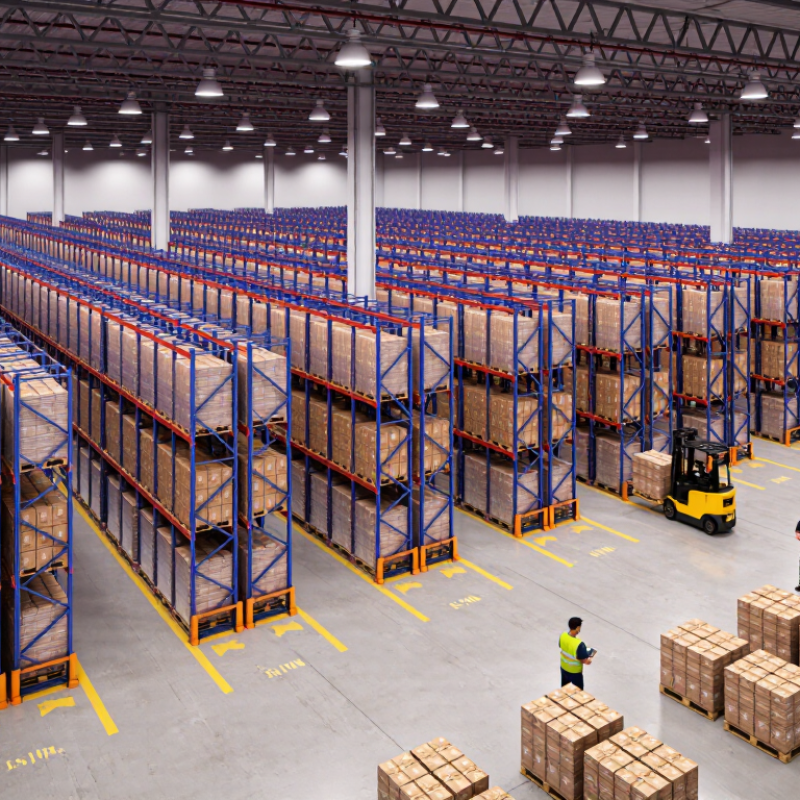
How to Choose the Right Impact Racks for Your Warehouse?
Define Pallet Loads, Forklift Types, and Design Criteria Under ANSI MH16.1
Start with the heaviest pallet you expect to store, not the average. Record its loaded weight, dimensions, overhang, and position on the beams. Measure every bay. Uneven loads matter. ANSI MH16.1, Specification for the Design, Testing and Utilization of Industrial Steel Storage Racks, provides criteria for rack design, testing, and use. Have a qualified rack designer verify beam and frame capacities, connections, bracing, anchorage, and required load signage for your actual configuration.
Forklift choice affects aisle width, turning clearance, lift height, and beam elevations. Check the layout using the truck’s real dimensions and turning path, not a catalog estimate. A narrow aisle on paper can become awkward when pallets overhang. I would not trust a tidy spreadsheet alone; verify clearances on the warehouse floor before installation.
Safety deserves space in the plan. The U.S. Bureau of Labor Statistics’ 2022 Survey of Occupational Injuries and Illnesses reported 4.8 total recordable cases per 100 full-time workers in transportation and warehousing. That sector-wide figure is not a rack-failure rate, but it reinforces the value of clear travel paths and accessible inspections. Include column protection where truck contact is plausible, and inspect racks after impacts. Even a small bend deserves attention.
How to Choose the Right Impact Racks for Your Warehouse?
Map Forklift Traffic to Identify Rack-End Impact Risks
Start with the routes forklifts actually take, not only the lines on the floor plan. Track each shift, especially during busy receiving periods. Mark tight turns, reversing points, blind intersections, and pallet staging areas beside rack ends. A truck swinging around a corner with a tall load may clip an upright even when the main aisle looks generous.
OSHA’s Powered Industrial Trucks eTool cites estimates of about 85 fatal and 34,900 serious forklift-related injuries each year in the United States. These figures cover forklift incidents broadly, not rack impacts alone, but they underline why traffic exposure deserves attention. Compare your route map with rack damage and near-miss records. Repeated marks on the same end frame are useful evidence. One limitation: observations can miss shortcuts taken on other shifts, so revisit the map with operators.
Tips: Mark rack ends near turning paths and crossing routes as higher-risk locations. Check sightlines from the driver’s seat, not just from a walkway. Consider suitable end protection where exposure is repeated, and inspect it after impacts. Protection is not a substitute for clear routes or sound rack design.
Choosing the right impact rack starts with how often workers need each pallet, not just how much floor space is available. Selective racks provide direct access to every pallet position, which suits warehouses with many SKUs or frequent picking. The trade-off is wider aisles and lower storage density. Space matters.
Drive-in racks use deep lanes that forklifts enter, reducing aisle space and increasing capacity for similar products. They typically operate on a last-in, first-out basis, so they may not suit stock that needs strict rotation. Deep lanes also make careful forklift operation essential. A small alignment error can damage a rail or pallet.
Push-back racks store pallets on nested carts. Each new pallet moves the earlier ones deeper into the lane, while unloading happens from the same aisle. This offers more density than selective racks and easier access than drive-in systems, but pallets still follow a last-in, first-out sequence. Not always.
Check pallet dimensions, load weights, forklift turning space, and floor conditions before choosing. A layout can look efficient on paper yet feel cramped during a busy shift; that detail is easy to miss. Have a qualified rack professional verify the design and load limits for the actual site.
Rack guards and forklift aisles must be planned together, not treated as separate purchases. A guard that absorbs a scrape can still steal the clearance a truck needs to turn. Measure the narrowest aisle, then check the forklift’s turning radius, load length, and mast position. Use the largest pallet you expect, not the tidy sample on a drawing. Small details matter.
Mark the proposed guard footprint with tape and test the route at low speed with a loaded truck, where site procedures permit. Watch the rear swing, fork tips, and pallet corners at intersections. Leave room for realistic steering corrections; operators do not trace perfect arcs. If a guard sits near an end frame, confirm it shields the upright without narrowing the approach to a rack slot. Recheck with a tall load, since visibility can change.
Choose guard height and anchoring to match likely contact points, and confirm installation details with a qualified rack professional. Keep guards clear of forklift travel paths and emergency access. A tape test helps, but it cannot replace checking loaded movement during a normal shift. Aisle markings can drift after layout changes. Review them when rack bays, trucks, or pallet sizes change, and record clearances so future adjustments have a reliable starting point.
How to Choose the Right Impact Racks for Your Warehouse?
Anchoring, load labels, and sprinkler clearance are easy to overlook when selecting impact racks. They affect stability and safe daily operation. Check the rack drawings against the actual floor layout before installation. Confirm anchor type, size, spacing, and embedment match the engineered design and the concrete slab’s condition. A cracked or thin slab may need review by a qualified professional. Don’t assume a larger anchor solves a weak floor. Small details matter.
Every rack bay should have a legible load label showing permitted loads and configurations. Make sure the figures match the installed beams, shelf levels, and stored goods. If a label is missing or unreadable, pause loading until the capacity is verified. It’s tempting to rely on what a similar rack holds. That is not a dependable check.
Keep stored materials at least 18 inches below sprinkler deflectors where NFPA 13’s applicable provisions require that clearance. Measure from the deflector to the highest stored item, not to the rack beam. The exact requirement can depend on sprinkler type, storage arrangement, and the locally adopted code. Verify the layout with a qualified fire-protection professional and the authority having jurisdiction. Clearance can disappear when pallets are stacked unevenly, so check it during routine warehouse inspections. I might miss it on a busy shift, too.
| Selection Check | What to Verify | Practical Acceptance Criteria | Action if the Check Fails |
|---|---|---|---|
| Rack configuration | Rack style, bay width, frame height, beam levels, and pallet dimensions match the warehouse’s inventory and handling equipment. | Use a configuration designed for the actual unit loads, aisle layout, and forklift or other material-handling equipment. Confirm changes against the rack design documents. | Have the rack layout and capacity reviewed before adding levels, changing beam positions, or storing different loads. |
| Impact exposure and protection | Identify aisle ends and upright frames exposed to forklift or pallet-truck traffic. | Consider suitable upright or end-of-aisle protection where impact is likely. Guards should not obstruct required aisles, sprinkler discharge, or access to rack components. | Install protection appropriate to the traffic and rack design, then inspect the rack for damage after any impact. |
| Anchoring | Check that base plates are anchored as specified and that the floor and concrete slab are suitable for the rack and its loads. | Anchor type, size, quantity, embedment, and installation must follow the approved rack design and applicable engineering requirements; there is no universal anchor specification for every rack or slab. | Keep the affected bay unloaded if anchoring is loose, missing, or damaged. Obtain a qualified assessment before returning it to service. |
| Load labels | Confirm that capacity information is legible and matches the installed rack configuration and stored unit loads. | Labels should state the applicable rated capacities and loading conditions clearly. Actual loads must remain within the ratings for the relevant beam level, bay, and configuration. | Replace missing or unclear labels and verify ratings from approved design information. Do not estimate capacity from appearance. |
| Sprinkler clearance | Measure vertically from the sprinkler deflector to the top of stored commodities or other obstructions. | NFPA 13 commonly requires at least 18 inches (457 mm) of clearance below sprinkler deflectors for applicable sprinkler arrangements. The required clearance can depend on sprinkler type, storage arrangement, and the adopted code edition. | Lower or reorganize storage, or obtain confirmation from the fire-protection designer or authority having jurisdiction before relying on an exception or alternate clearance. |
| Visible damage and condition | Inspect uprights, braces, beams, beam connectors, base plates, and anchors for bending, cracks, looseness, or displacement. | Components should be in serviceable condition and assembled as designed. A rack that has been struck or visibly deformed should be assessed rather than judged safe by appearance alone. | Restrict access or unload the affected area when damage may compromise stability, then arrange a competent inspection and repair. |
| Floor and operating environment | Check slab condition, floor level, drainage or moisture issues, and the route used by lifting equipment. | The supporting floor must be suitable for the rack loads and anchoring system. Keep aisles clear so operators can position loads without striking frames. | Resolve floor or traffic hazards and seek engineering review where slab capacity, cracking, or anchor performance is uncertain. |
Important: Rack capacity and sprinkler-clearance requirements depend on the installed system, stored commodities, local code adoption, and approved design documents. Confirm site-specific requirements with qualified professionals and the authority having jurisdiction.
Map the routes forklifts actually use, including tight turns, reversing points, and blind intersections. Mark pallet staging areas beside rack ends. Check the map during busy shifts, too.
Drivers may take shortcuts that the plan does not show. Watch from the driver’s seat and ask operators about their usual paths. One visit may miss a whole shift.
Look for recurring marks on the same end frame and compare them with near-miss records. A tall load swinging around a corner can clip an upright.
No. Suitable protection may help at repeatedly exposed locations, but it does not replace clear routes or sound rack design. Inspect protection after impacts.
They give direct access to every pallet position, which can suit many stock-keeping units or frequent picking. The trade-off is wider aisles and lower storage density.
Deep lanes can reduce aisle space and increase capacity for similar products. Forklifts enter those lanes, so careful alignment matters. A small error can damage a rail or pallet.
New pallets move earlier pallets deeper on nested carts, and unloading happens from the same aisle. This can offer more density than selective racks. Pallets still follow last-in, first-out sequencing.
Check pallet dimensions, load weights, turning space, and floor conditions. A layout may look efficient on paper but feel cramped during a busy shift. Have a qualified rack professional verify the site design and load limits.
Choosing the right Impact Racks begins with understanding the loads they must support, including pallet dimensions, weight, and load distribution. Match these requirements with the forklifts used in the warehouse and establish design criteria in accordance with ANSI MH16.1. Then map forklift routes, turning points, and loading areas to identify rack ends and other locations most exposed to collisions.
Compare selective, drive-in, and push-back configurations based on inventory access, storage density, and operating patterns. Size protective guards and aisles to reduce impact risks while preserving safe forklift access. Before use, verify that racks are properly anchored, load labels are clear and accurate, and sprinkler clearance is maintained. In particular, account for NFPA 13’s 18-inch clearance requirement when planning rack heights and stored goods, so protection measures support both efficient operations and warehouse safety.

SunliRack