Narrow Aisle Storage is a warehouse system designed to increase pallet capacity without expanding the building footprint. It uses narrower travel lanes and specialized forklifts, such as reach trucks or turret trucks. These machines can operate in spaces that conventional counterbalance forklifts cannot enter safely. In a typical layout, aisles may measure about 1.8 to 2.5 meters wide, depending on the equipment and pallet dimensions.
The working principle is simple, but the planning is not. Racks stand closer together, while guided trucks retrieve pallets from greater heights. Operators depend on accurate floor markings, stable rack protection, and clear visibility around each turning point. A warehouse manager should review pallet sizes, rack loads, lift heights, and daily movement volume before choosing this design. Small errors can create delays.
Space is the advantage.
However, Narrow Aisle Storage may reduce forklift flexibility and require trained operators. Charging areas, emergency access, floor conditions, and maintenance needs also deserve careful attention. A system that looks efficient on paper can perform poorly when products vary widely in size or arrive unpredictably. That limitation is easy to overlook. This guide explains how narrow aisle systems function, which equipment supports them, and where their practical value may be strongest. It also considers the compromises that experienced warehouse teams should examine before making a costly layout decision.
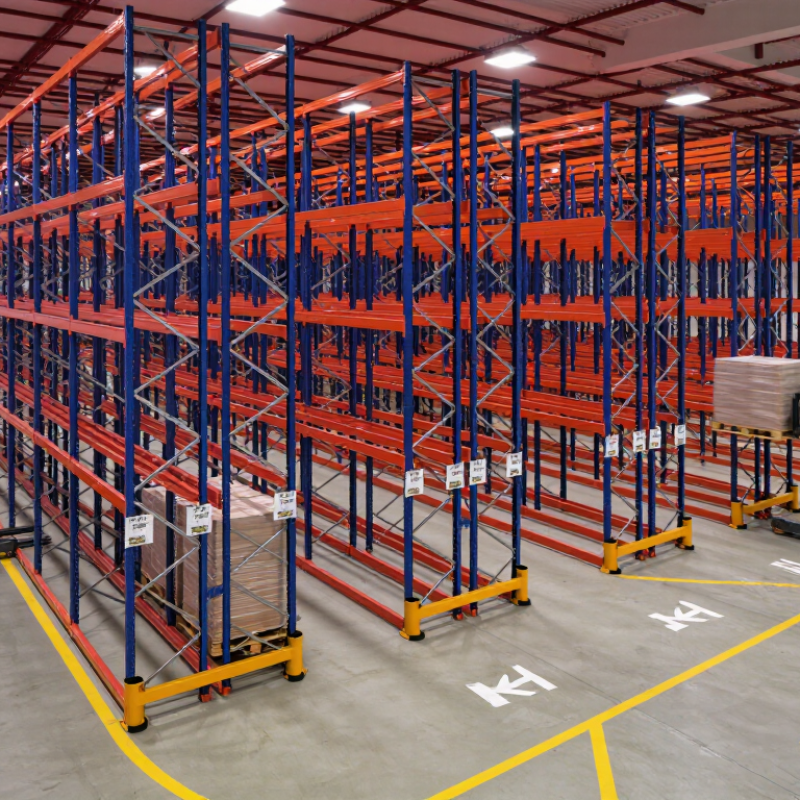
Narrow aisle storage uses aisles measuring roughly 6–8 feet wide, compared with wider conventional layouts. This tighter spacing allows more pallet positions within the same building footprint. Racks usually rise higher, so the design uses vertical cubic space rather than floor space alone. The 2024 WERC DC Measures report highlights space utilization as a key distribution-center benchmark, supporting this three-dimensional approach.
The layout typically requires reach trucks, turret trucks, or guided handling equipment. These machines turn inside restricted aisles and place pallets at greater heights. A six-foot aisle can look efficient on a warehouse plan. It may feel different when operators handle damaged pallets or urgent orders. Safety clearance, rack protection, visibility, floor condition, and emergency access still require careful review. OSHA standard 1910.176(a) requires clearances suitable for safe material handling, but it does not prescribe one universal aisle width.
High-density storage can improve capacity without expanding the building. The 2024 MHI Annual Industry Report found that 83% of supply-chain professionals expect greater use of robotics and automation within five years. That trend makes narrow layouts more practical, especially where labor availability and land costs are challenging. Yet density can reduce picking speed if travel paths, replenishment rules, and slotting decisions are weak. More pallets do not automatically mean better performance. The uncomfortable part is that a narrow aisle system may expose planning mistakes faster.
Narrow aisle storage uses tighter rack spacing to increase pallet positions without expanding the building footprint. Reach trucks make this possible by extending their forks into deep rack locations. Many models serve racks approximately 30–40 feet high, depending on capacity, mast design, floor quality, and load requirements. Height changes everything.
A reach truck travels in a narrow lane, then retracts its mast or forks while moving. At the rack, the operator positions the truck carefully, raises the load, and extends the forks into the pallet opening. Guide wires, rail systems, or visual aisle controls can improve alignment. Yet real warehouses are rarely perfect. Uneven floors, damaged pallets, and poor lighting can reduce safe operating margins.
The 2024 MHI Annual Industry Report found that 55% of surveyed supply-chain professionals planned to increase technology and innovation investment. That interest supports higher-density storage, but equipment alone cannot solve every problem. OSHA’s powered industrial truck guidance emphasizes operator training, load stability, inspections, and site-specific conditions. A 40-foot rack may look efficient on a layout drawing, but actual performance depends on travel speed, retrieval frequency, battery changes, and operator visibility. Small delays accumulate. Managers should measure pallet throughput and near-miss trends before choosing greater height. A careful trial often reveals constraints that a spreadsheet misses.
Narrow aisle storage uses closely spaced pallet racks to increase warehouse capacity without expanding the building. The aisles are commonly narrower than those used by standard counterbalance forklifts. In high-density layouts, every inch affects pallet access, turning space, and operator visibility.
Very narrow aisle, or VNA, trucks are designed for aisles under 6 feet wide. Their masts lift pallets to considerable heights while the forks rotate or move sideways inside the rack. This lets the truck store and retrieve pallets without turning the entire vehicle. Some models use rail guidance or floor-mounted wire guidance to maintain a steady path. Cameras, sensors, and height controls can also help operators work around tall loads.
From practical warehouse checks, the aisle width should never be chosen from the truck specification alone. Pallet dimensions, rack beams, floor condition, load overhang, and emergency clearances all matter. A six-foot aisle may work for one layout but fail in another. That assumption can be costly. Operators need training because a small steering error near an upper rack can damage goods or equipment. VNA trucks also require smooth floors and disciplined traffic rules. Before installation, teams should test the turning envelope with the actual pallet sizes, not an ideal drawing. A little space often disappears in daily operations.
What Is Narrow Aisle Storage and How Does It Work?
Narrow aisle storage reduces the space between pallet racks. Standard aisles may need 3 to 3.6 meters. Narrow aisles often measure about 1.8 to 2.7 meters. Specialized lifting equipment can place pallets higher and deeper. This layout may create 30–50% more pallet positions within the same building. The exact result depends on rack height, pallet size, fire systems, and handling routines.
A practical warehouse assessment starts with a floor plan and inventory profile. Measure every aisle, column, dock, and emergency route. Then compare current pallet density with a narrow aisle design. In many projects, the largest gain comes from using vertical space more effectively. A 10-meter-high building offers very different potential from a 6-meter facility. That is the trade-off.
Narrow aisles can reduce travel distance between storage locations, but they may require precise vehicle control. Training, visibility, floor quality, and rack protection also affect daily performance. I would not promise a fixed 50% increase without checking these details. Some sites gain closer to 30%, while carefully planned facilities approach 50%. Measure twice. The best design balances pallet capacity, access speed, worker safety, and future growth.
Narrow aisle storage reduces the operating aisle width between pallet racks, allowing more rack rows and pallet positions within the same building footprint. The following comparison uses a standardized planning model to illustrate the potential capacity increase.
| Storage Configuration | Typical Aisle Width | Recommended Handling Equipment | Rack Levels | Illustrative Pallet Positions | Change vs. Wide Aisle | Best Use Case |
|---|---|---|---|---|---|---|
| Wide Aisle | 3.3–3.7 m (10.8–12.1 ft) |
Counterbalance forklift or reach truck | 4 | 480 positions | Baseline | Facilities requiring flexible truck access, frequent SKU changes, and straightforward loading operations. |
| Narrow Aisle | 2.4–3.0 m (7.9–9.8 ft) |
Reach truck or narrow-aisle forklift | 4 | 624 positions | 30% more | Warehouses seeking additional pallet capacity while retaining relatively flexible forklift operations. |
| Very Narrow Aisle | 1.6–2.0 m (5.2–6.6 ft) |
Turret truck or articulated narrow-aisle truck | 4 | 720 positions | 50% more | High-density storage where maximum pallet capacity and vertical space utilization are priorities. |
Narrow aisle storage uses reduced rack spacing to increase pallet positions within the same building. Specialized trucks travel through aisles that may be only 1.8 to 2.5 meters wide. The design looks efficient on paper. Daily movement can tell a different story.
Throughput depends on more than storage density. If trucks must wait at aisle entrances, capacity gains quickly disappear. Poor visibility, mixed pedestrian traffic, or frequent pallet damage can also slow operations. A practical site check should measure travel distances, peak order waves, charging locations, and emergency access. Shorter aisles are not always faster aisles.
The floor needs close attention. Small variations at joints can affect truck stability, rack alignment, and lifting accuracy at height. Engineers should verify slab capacity, levelness, rack anchoring, and clearances before installation. Safety barriers and clear operating rules matter too. A trained operator still needs predictable space.
Adoption can fail when planners focus only on extra positions. I have seen layouts that gained storage but lost flexibility for unusual pallets and seasonal surges. That trade-off deserves honest review. A slightly wider aisle may support safer turns, easier inspections, and better recovery during equipment downtime. The best design balances measured throughput with real floor conditions, not attractive drawings alone.
It uses tighter rack spacing to create more pallet positions inside the same building. A small layout change can increase capacity. However, tighter aisles reduce turning space and visibility.
The truck travels along a narrow aisle and positions itself beside the rack. It raises the pallet, then extends its forks into the storage opening. The mast or forks retract during travel. Height changes everything.
Many reach trucks serve racks about 30–40 feet high. The actual limit depends on truck capacity, mast design, floor quality, and load weight. A tall rack requires careful alignment and stable pallets.
Very narrow aisle trucks commonly operate in aisles under six feet wide. Some layouts use aisles around 1.8 to 2.5 meters wide. The correct width also depends on pallet size, overhang, and emergency clearance.
No. The specification is only one part of the decision. Teams should test the actual pallet, rack, and turning envelope. A six-foot aisle may work in one warehouse and fail in another. Assumptions become expensive.
Uneven joints can affect truck stability, rack alignment, and lifting accuracy. Smooth, level floors support safer movement at height. Teams should check slab capacity, levelness, anchoring, and clearances before installation.
Waiting at aisle entrances can erase storage-density gains. Mixed pedestrian traffic, poor lighting, damaged pallets, and long travel distances also create delays. Battery changes and limited operator visibility may reduce daily output. Small delays accumulate.
Rail systems, guide wires, cameras, and visual controls can improve alignment. They do not replace trained operators or regular inspections. Real warehouses still contain uneven floors and imperfect pallets.
They should measure pallet throughput, retrieval frequency, travel time, battery changes, and near-miss trends. A practical trial can reveal problems hidden by a spreadsheet. The best design balances capacity, safety, flexibility, and floor conditions. Details matter.
Narrow Aisle Storage is a warehouse layout strategy that uses aisles approximately 6–8 feet wide to create a higher-density storage environment. By reducing the space between rack rows, facilities can install more pallet positions without expanding their building footprint. Reach trucks can access racks that rise roughly 30–40 feet, allowing businesses to make better use of vertical space while maintaining organized pallet handling and retrieval.
For even tighter layouts, very narrow aisle trucks can operate in aisles under 6 feet wide and place or retrieve loads from tall racks with precise control. Depending on the facility design, this approach may provide 30–50% more pallet positions than conventional layouts. However, adoption requires careful planning. Operators must balance storage density with traffic flow, equipment throughput, worker safety, and the condition and flatness of the warehouse floor. The right solution depends on inventory turnover, rack height, handling requirements, and the available operating space.

SunliRack