China’s boltless storage sector has become a practical sourcing option for global buyers. These systems use simple frames, adjustable beams, and tool-free assembly. A warehouse team can build one unit with a rubber mallet, gloves, and a clear floor plan. That simplicity is valuable, but it can also hide weak steel, unstable joints, or inconsistent powder coating.
W. Edwards Deming, a respected manufacturing quality expert, said, “Quality comes not from inspection, but from the improvement of the production process.” His principle applies directly to Boltless Systems suppliers. Reliable manufacturers control steel thickness, hole spacing, load testing, coating adhesion, and packaging damage before shipment. Buyers should request drawings, material specifications, test reports, factory photographs, and recent project references. A low quotation alone proves very little.
China offers many suppliers, yet they are not equally experienced. Some specialize in light-duty garage storage. Others produce heavy-duty warehouse shelving for industrial environments. The difference appears in beam deflection, connector fit, labeling, and installation guidance. These details matter.
There is no perfect supplier.
Even experienced buyers can overlook small weaknesses. A promising sample may not represent continuous production quality. Therefore, this guide examines China’s top Boltless Systems suppliers through manufacturing capability, customization, export experience, product safety, and communication reliability. The goal is not simply to identify the cheapest factory. It is to find a dependable partner that can protect inventory, reduce assembly problems, and support long-term warehouse growth.
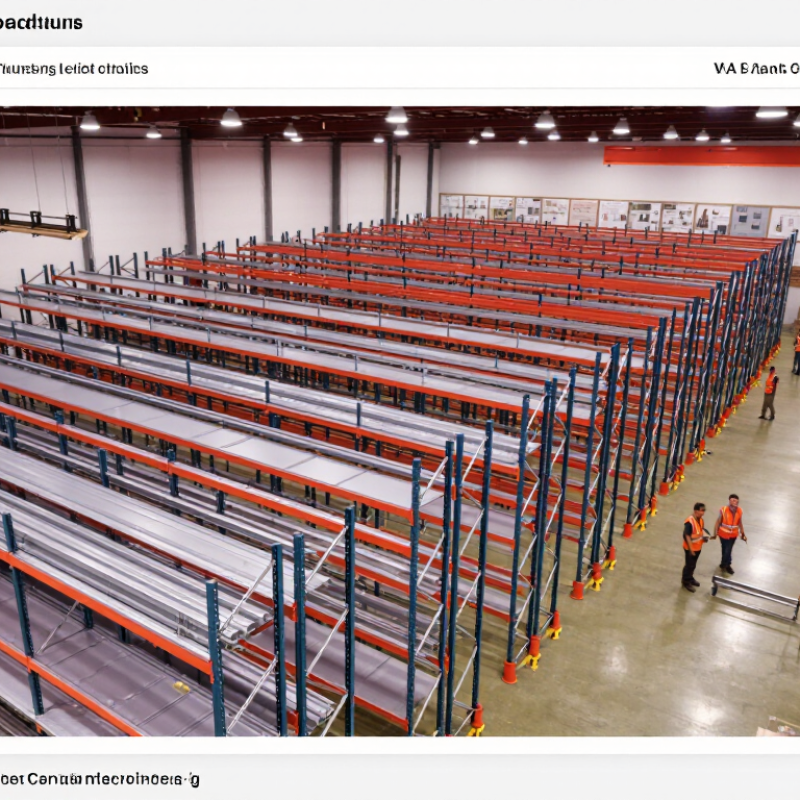
Boltless storage systems use mechanical connections instead of welded or bolted joints. Their main parts are rivet frames, horizontal beams, and decking panels. Rivets lock through punched openings, allowing faster assembly with basic tools.
Rivet frames carry vertical forces through upright posts and bracing. Beam levels support pallets, cartons, or steel shelves. Decks spread weight across the beams. Common options include wire mesh, particle board, and steel panels. Each option behaves differently under impact, moisture, and uneven loading.
Rated loads need careful attention. A supplier should provide capacity per beam level and per complete bay. Those figures assume specific spans, deck types, and load distribution. Do not treat a catalogue number as universal. It is not.
During warehouse checks, I look for upright deflection, loose connections, damaged decks, and missing safety pins. A loaded shelf should remain stable when workers place boxes near the front edge. One detail is easy to miss. Floor condition affects the whole structure.
Global buyers should request drawings, material specifications, test evidence, and clear installation instructions. The supplier’s engineering support also matters when aisle widths or seismic conditions change. In practice, boltless assembly saves time, but careless loading can cancel that advantage. I have seen teams trust the frame while ignoring the deck rating. That mistake deserves another review.
China Top Boltless Systems Suppliers for Global Buyers
China produced 1,005.1 million tonnes of crude steel in 2023, according to worldsteel. This volume creates a deep supply base for boltless shelving systems, uprights, beams, decks, and accessories. It also supports flexible material sourcing and competitive production capacity. The scale is real.
Global buyers should not treat steel output as automatic proof of supplier quality. In supplier audits, practical checks often reveal more than polished catalogs. Ask for steel grades, thickness tolerances, coating specifications, and recent load-test records. Ask for proof. A reliable factory should explain how each component is formed, inspected, packed, and traced. Sample assemblies should stand level without excessive movement. Connection points deserve close attention, especially after repeated installation and removal.
Export experience matters too. Suppliers should provide clear drawings, carton dimensions, container-loading plans, and inspection procedures. For overseas projects, confirm corrosion protection against the destination’s climate. Humid warehouses and coastal sites may require stronger surface treatment. Packaging can still be overlooked. Bent frames, missing clips, and unclear labels create avoidable costs at arrival. Details still decide. Buyers may also request an independent pre-shipment inspection and compare measured loads with declared capacities. A large steel ecosystem offers advantages, but inconsistency remains possible between factories, batches, and subcontracted processes. That is where careful verification, not production volume alone, protects a purchasing decision.
China remained the world’s largest crude steel producer, reaching approximately 1,019.1 million tonnes in 2023.
Source: World Steel Association, World Steel in Figures 2024. Figures are reported in million tonnes.
For global buyers, boltless systems should be judged by evidence, not catalog photographs. ANSI/RMI MH16.1 requires rack designs to reflect actual loads, configuration, connections, and site conditions. Ask suppliers for signed calculations, steel grades, beam deflection results, and installation records. A useful load-test report should show test setup, applied load, deformation, failure behavior, and laboratory competence. One page saying “passed” is not enough.
EN 15635 places strong attention on safe use and inspection. It calls for expert inspections at intervals not exceeding twelve months, with damaged components isolated promptly. Eurostat’s 2022 Accidents at Work report recorded about 3.3 million non-fatal workplace accidents across the European Union. The figure is not rack-specific, but it shows why warehouse safety cannot rely on appearance alone. Inspectors should check upright dents, loose connectors, uneven floors, missing locking pins, and overloaded shelves. Small details matter.
For Chinese suppliers, buyers should compare the report date, sample dimensions, loading method, and acceptance criteria. The test must match the proposed system, not a stronger prototype. This is often overlooked. Real installations also need floor surveys, anchor details where required, and clear load plaques. Supplier experience helps, but independent verification remains essential. A polished certificate can still hide weak assumptions. Recheck everything.
China Top Boltless Systems Suppliers for Global Buyers?
Shortlisting should begin with evidence, not polished catalogues. The ISO Survey 2022 recorded 1,265,216 ISO 9001 certificates across 188 countries and economies. Certification matters, but it does not prove every production batch is consistent. Ask for the certificate scope, issuing body, expiry date, and recent corrective-action records. A supplier should also explain how incoming steel, beam dimensions, coating thickness, and final load tests are controlled.
A factory audit should follow one order from raw material storage to packed cartons. Check heat numbers, calibrated measuring tools, weld inspection records, and pallet labeling. Look closely at the powder-coating line. Uneven edges and thin coverage often appear there. Audit reports should include dated photographs, employee interviews, and sampled records. No audit is perfect. My own screening can miss a weak subcontractor if the visit is too short.
OEM capacity requires more than a customized drawing. Confirm tooling ownership, press capacity, mold-change time, prototype approval, and engineering revision control. Request a pilot run before volume production. The UNIDO International Yearbook of Industrial Statistics shows China produces over 30% of global manufacturing value, creating strong capacity but also wide supplier variation. Production flexibility is useful. Unverified flexibility is a risk. Ask for monthly output data, peak-season lead times, and evidence from comparable projects.
| Screening Dimension | Recommended Shortlist Standard | Evidence Required from Supplier | Buyer Evaluation Method | Priority |
|---|---|---|---|---|
| Quality Management System | Valid ISO 9001:2015 certification covering manufacturing and quality control activities | Current certificate, certification body, accreditation details, scope, issue date, and expiry date | Confirm the certificate with the issuing certification body or its public certificate database | Mandatory |
| Factory Audit Readiness | Accepts an independent on-site audit before order approval | Factory address, production-area photos or video, audit contact, corrective-action records, and audit history | Use a risk-based audit covering labor, safety, traceability, quality, maintenance, and production capacity | Mandatory |
| Boltless Connection Design | Documented interlocking or slot-in assembly system with repeatable fit and stable load performance | Assembly drawings, connection details, load-test reports, installation instructions, and tolerance data | Review samples and verify assembly, disassembly, alignment, and load performance against the approved specification | High |
| Material Traceability | Traceable steel or aluminum sourcing from incoming material through finished goods | Material certificates, heat or batch records, incoming inspection forms, and lot identification procedure | Sample-check production records and match material identification to shipment documentation | High |
| Surface Treatment | Controlled powder coating, galvanizing, or other specified finish with documented inspection | Coating specification, thickness records, adhesion test results, corrosion-test evidence where applicable, and color reference | Inspect finish consistency and compare test records with the purchase specification | High |
| OEM and ODM Capability | Can manufacture custom dimensions, profiles, connectors, colors, packaging, and documentation | Engineering team profile, sample-development process, tooling list, drawing approval workflow, and prior non-confidential samples | Run a sample project with approved drawings, revision control, prototype review, and pre-production approval | High |
| Production Capacity | Capacity is demonstrated against the buyer’s forecast rather than stated only as a marketing figure | Monthly capacity by process, current utilization, equipment list, staffing plan, and peak-season capacity plan | Compare forecast demand with verified equipment, labor, lead time, and subcontracting exposure | High |
| Quality Control Process | Documented incoming, in-process, final, and pre-shipment inspection procedures | Inspection plans, control plans, gauge-calibration records, nonconformance reports, and corrective-action procedure | Review records for dimensions, welds, coating, packaging, labeling, and load-related characteristics | Mandatory |
| Testing and Compliance | Product testing is aligned with the destination market, application, and agreed technical standard | Test reports from competent laboratories, technical files, declarations where applicable, and product safety documentation | Check report scope, sample identity, test date, laboratory competence, and relevance to the final product | High |
| Export Experience | Demonstrated ability to prepare export documents and meet destination-country packaging requirements | Sample commercial documents, packaging specifications, labeling method, export references, and logistics process | Validate document accuracy through a trial shipment or document review before mass production | Medium |
| Packaging and Container Utilization | Packaging protects components from deformation, corrosion, moisture, and transit damage | Packing drawings, carton or pallet specifications, drop-test approach, loading plan, and moisture protection method | Review a packed sample and calculate usable container volume, weight distribution, and damage risk | Medium |
| Commercial and After-Sales Support | Clear quotation, warranty terms, spare-parts policy, response process, and complaint closure procedure | Signed quotation, warranty statement, service-level commitments, escalation contacts, and corrective-action examples | Score response time, technical accuracy, transparency, and resolution quality during RFQ and sampling | Medium |
| Shortlisting Decision | Advance only suppliers that pass certification verification, factory audit, sample approval, and commercial review | Completed supplier questionnaire, verified documents, audit report, approved sample, and signed specification | Use a weighted scorecard; do not approve a supplier solely on price, catalog range, or online claims | Mandatory |
Note: Supplier-specific certification, audit, capacity, and compliance claims should be independently verified before purchase approval.
For global buyers, selecting a boltless systems supplier requires more than comparing unit prices. A practical workflow starts with product drawings, steel thickness, load requirements, and surface treatment. Ask for samples, inspection records, and recent production photos. Small details matter. A shelf that looks strong may perform differently under uneven warehouse loads.
Confirm the minimum order quantity before requesting a formal quotation. Some factories accept mixed sizes, while others require one finish or specification per batch. Put this point in writing. Then agree on Incoterms, such as FOB, CIF, or DAP. Each term changes who pays for export handling, freight, insurance, customs clearance, and delivery. I have found that vague shipping language creates expensive surprises.
Check the likely HS code with a licensed customs adviser in the destination market. Classification can vary by material, design, and local rules. Do not copy a code from an old invoice without verification. Build a landed-cost sheet including product value, packaging, inland transport, ocean freight, insurance, duty, taxes, port fees, and final delivery. Add a realistic buffer for exchange-rate movement and delays. My earlier estimates were sometimes too optimistic because storage charges were overlooked. That mistake is easy to repeat. Review the calculation against a real shipment before approving a large order.
Request signed calculations, steel grades, connection details, and beam deflection results. Photographs are not enough. Ask for installation records and site-condition assumptions. A complete report should explain loads, deformation, and failure behavior.
It should identify the test sample, dimensions, loading method, and acceptance criteria. Check the applied load carefully. The report should show deformation measurements, test photographs, and laboratory competence. A single “passed” statement reveals too little.
Arrange an expert inspection at least every twelve months. Inspect sooner after impacts, relocation, or heavy loading changes. Small damage matters. Check bent uprights, loose connectors, missing locking pins, uneven floors, and overloaded shelves.
A clean surface can hide weak connections, excessive deflection, or poor floor support. Check shelf levels with a measuring tool. Look under beams and around anchor points. I sometimes trust appearance too quickly, which is a mistake.
Compare the report date, sample dimensions, loading method, and acceptance rules. The tested sample should match the proposed configuration. A stronger prototype proves less. Recheck beam sizes, shelf spacing, connectors, and actual operating loads.
Follow one order from raw steel storage to packed cartons. Check material identification, calibrated tools, weld records, coating thickness, and pallet labels. Look closely at coating edges. Thin coverage may appear there.
Certification shows a documented management system, not perfect production. Verify its scope, issuing body, expiry date, and corrective-action records. Review recent batch data and final inspection results. Certificates help. They do not settle everything.
Confirm tooling ownership, press capacity, changeover time, prototype approval, and drawing revision control. Request a pilot run before larger production. Ask for monthly output and peak-season lead times. Flexible production sounds useful, but unverified flexibility remains a risk.
China has become a major sourcing destination for Boltless Systems, supported by a large steel manufacturing base and broad capabilities in forming, coating, and assembly. These systems typically use rivet-connected frames, adjustable decks, and clearly defined rated loads, making them suitable for warehouses, workshops, retail backrooms, and industrial storage. Buyers should evaluate upright dimensions, beam profiles, decking options, corrosion protection, and documented load capacity before placing an order.
A reliable sourcing process begins with supplier shortlisting based on ISO 9001:2015 certification, factory-audit results, production consistency, and OEM customization capacity. Safety verification should include alignment with recognized benchmarks such as ANSI/RMI MH16.1 and EN 15635, together with practical load-test reports. International buyers should also confirm MOQ, packaging, Incoterms, HS codes, lead times, and total landed cost. Comparing these factors systematically helps reduce purchasing risks and identify suppliers capable of delivering compliant, durable, and cost-effective storage solutions.

SunliRack