Choosing the right Stacking Systems can change how a warehouse uses space, handles inventory, and supports daily work. A setup that looks efficient on a plan may feel awkward when operators move pallets through narrow aisles or reach upper levels. Small details matter. Load size, product turnover, ceiling height, floor capacity, and equipment access all shape the decision.
Technology expert Bill Gates offered a useful warning about automation: “Automation applied to an inefficient operation will magnify the inefficiency.” His observation is relevant when comparing warehouse storage options. A system should fit the way goods actually move, not just promise more storage positions. Selective pallet racks offer direct access to many loads. Drive-in systems can store similar products densely, while push-back racks and pallet flow systems support different rotation and picking needs. Each has trade-offs.
This guide examines the leading systems and the conditions that suit them. It also considers safety, access, installation, and future changes in inventory. The right choice is rarely the most impressive-looking one. It is the one workers can use reliably, day after day. Some assumptions will still need testing. That is worth admitting. A clear site assessment, accurate load data, and qualified engineering review provide a stronger starting point than a quick comparison of product brochures.
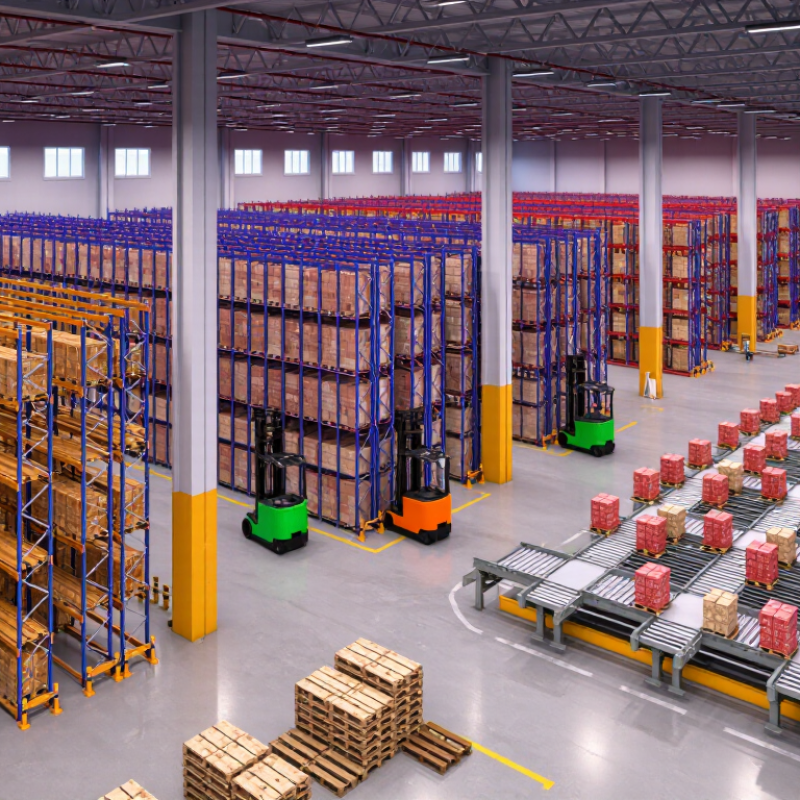
Warehouse stacking systems are planned methods for storing goods vertically while keeping them stable and accessible. They include floor stacking and rack-based layouts, each suited to different loads and picking needs. Selective pallet racks give workers direct access to each pallet. Drive-in racks use deeper lanes, allowing forklifts to place pallets along rails. In pallet-flow systems, rollers move older stock toward the picking face as new pallets enter from the other end.
The system works through clear load paths, assigned locations, and safe equipment movement. A forklift deposits a pallet at a designated level; beams or supports carry its weight down to the floor. Dense layouts can save space, but they may limit access to individual items. That trade-off matters. Before choosing a layout, warehouse teams should review pallet dimensions, turnover rates, floor capacity, and forklift turning space. Load signs and routine checks help spot bent beams or loose connections. Even a well-planned system can become awkward when inventory changes, so the layout deserves regular review.
Tips: Keep heavy pallets low, leave marked travel lanes, and never exceed posted rack capacities. Measure actual pallets, not just catalog dimensions. A small mismatch can cause trouble.
| System | How It Works | Pallet Access | Typical Stock Rotation | Best Suited For | Key Considerations |
|---|---|---|---|---|---|
| Selective Pallet Racking | Individual pallet positions are arranged in rack bays with an aisle in front of each rack row. A forklift retrieves pallets directly from the rack. | Direct access to each pallet position. | Flexible; inventory rotation is managed through warehouse procedures or software. | Warehouses with many product lines, varied order profiles, and a need for frequent access to specific pallets. | Provides high selectivity but uses more aisle space than many high-density systems. Rack layout and load limits must suit the building and handling equipment. |
| Drive-In Racking | A forklift enters a supported storage lane and places pallets on rails, generally loading and retrieving from the same end. | Access is typically by lane; pallets at the front are reached first. | Usually last-in, first-out (LIFO). | Large quantities of a small number of products, especially where storage density matters more than access to every pallet. | Requires compatible pallets, careful forklift operation, and consistent lane loading. Deep lanes can make older stock less accessible. |
| Drive-Through Racking | Similar to drive-in racking, but forklifts can enter from both ends of the lane. Loading and retrieval can take place on opposite sides. | Lane-based access from either end; individual pallets within a lane are not all directly accessible. | Can support first-in, first-out (FIFO) when loading and picking are organized at opposite ends. | High-volume products that benefit from dense storage and planned FIFO movement. | Needs access aisles on both sides of the rack. The operating method must be designed and followed to preserve the intended stock rotation. |
| Push-Back Racking | Each lane contains nested carts or carriers on inclined rails. Placing a new pallet pushes the stored pallets farther back; removing the front pallet allows the next one to move forward. | Access is by lane, with picking normally from the front. | Usually LIFO within each lane. | Medium-density storage for multiple product lines that each have several pallets in stock. | Offers more density than selective racking but less selectivity. Pallet dimensions, condition, and weight must be compatible with the system. |
| Pallet Flow Racking | Pallets are loaded at the higher end of a sloped lane and travel on rollers or wheels toward the picking face under gravity. | Lane-based access, with picking at the discharge end. | FIFO, provided pallets are loaded and picked from the designated ends. | High-throughput products, date-sensitive inventory, and operations that need clear separation between replenishment and picking. | Requires suitable, consistent pallets and planned lane replenishment. Roller tracks need inspection and maintenance. |
| Mobile Pallet Racking | Rack rows are mounted on powered or manually operated mobile bases. The system opens an aisle at the selected row when access is needed. | Direct access to pallets in the opened aisle; usually only one or a small number of aisles are open at a time. | Flexible; stock rotation depends on the warehouse’s picking process. | Facilities seeking to increase pallet storage while retaining access to individual pallet positions. | Movement controls, safety systems, floor condition, and access time need consideration. Retrieval may take longer than in layouts with permanent aisles. |
| Cantilever Racking | Horizontal arms extend from upright columns, leaving the front of the storage level open for loading long or irregular items. | Items are accessed from the front of the rack. | Flexible; determined by the storage and picking process. | Long or bulky goods such as timber, pipe, sheet material, and furniture components. | Designed primarily for long loads rather than standard pallet storage. Arm spacing and load capacity must match the goods being stored. |
It is a planned way to store goods vertically while keeping them stable and reachable. Systems include floor stacking and pallet racks.
A forklift places each pallet on a designated level. Beams and supports transfer its weight toward the floor. Load limits matter.
Selective racks provide direct access to each pallet, often with wider aisles. Drive-in racks store pallets deeper in lanes, saving aisle space but limiting access.
Inclined rollers move pallets toward the picking face as other pallets are removed. New pallets enter from the opposite end. Replenishment needs planning.
Measure actual pallet sizes, load weights, ceiling clearance, sprinkler spacing, aisle width, and forklift turning points. Small gaps matter.
Compare pallet positions with retrieval frequency, product rotation, and SKU variety. Dense storage may suit similar, slower-moving goods. It can complicate picking.
Post load limits, keep heavy pallets low, and mark travel lanes. Inspect beams, anchors, and connections regularly. Report bent parts promptly.
A trial section can reveal awkward turns, blocked sightlines, or congestion near receiving doors. Drawings can miss real work patterns. People do too.
Stacking Systems help warehouses organize goods safely, use available space efficiently, and support smoother handling. They generally fall into two broad categories: structured pallet racking, which stores loads on shelves or frames, and floor-based methods, which place goods directly on the ground in organized blocks. Choosing a system involves considering the types and dimensions of products, load weight, inventory turnover, access requirements, building layout, and the equipment available for moving goods.
Pallet racking can provide dense storage while keeping individual pallets accessible, making it suitable for varied inventory and frequent retrieval. Floor stacking and block stacking can be practical for stable, uniform goods stored in larger quantities, though access may be more limited when items are placed behind one another. The best option depends on the warehouse’s daily operations, space constraints, safety needs, and plans for future growth. A carefully matched system can improve capacity and workflow while keeping stored goods orderly and accessible.

 SunliRack